Friday Review: After The Blast

Friday Review: After The Blast

This week’s review is a short work from my friend and fellow author T.L. Knighton. I grabbed it with my Kindle Unlimited and am planning to get the second book in the series already to add to my “to read” pile. After the Blast is a nice, quick bit of light reading that sets up a series quite well. I’m looking forward to learning more in the second book.

The premise of the novelette is this: there’s a nuclear attack on the US. How extensive it is, who launched it, and what the international response is are never covered in the story. Instead, the action focuses on the main character, Jason, as he makes his way to join his family in north Georgia. He encounters some good folks and bad folks on his journey and transitions from being a menial office worker to being something of a badass by the end of the story.

The pacing is a bit rough at the start but once Knighton finds his stride, it’s all good. And, with it only being 0.99 (or free with Kindle Unlimited), it’s well worth it. A nice impulse buy that will get you hooked on what looks to be a great series.


Four and a half rainbow farting zebricorns — no major complaints but there were some editing problems (nothing major — nothing that renders it unreadable like what happened with the eBook version of The Road).

— G.K.

Fanfic Friday — Star Trek Voyager: Inosculation Updated!

Fanfic Friday -- Star Trek Voyager: Inosculation Updated!

Happy Friday, everyone. The latest chapter of Star Trek Voyager: Inosculation is up for your reading pleasure. Things are moving forward and we learn a bit more about T’Loran’s past and much fun is had. Okay, not so much “fun” but “setting up things” because yay for exposition.

Anyhow, I have some other work to clear out of the way so go on and get your read on!

— G.K.

Surviving the Zombie Apocalypse: Setting Up A Base

Surviving the Zombie Apocalypse: Setting Up A Base

So far we’ve covered the preparing, surviving the early days, getting out of Dodge, who to save (or invite) for your group and who not to, and what kind of groups you’ll run into. Now let’s talk about how to decide where to set up your group’s base of operations so you can ride out the zombie apocalypse in relative safety, good health, and quiet with an eye towards re-establishing order and a stable (and sane) social base. You’ll want to do this in at least three stages because trying to do it all at once will be virtually impossible.

Firstly, look for a place that is almost already secure but would be passed over by most groups because it’s psychologically tarnished. Do not go after valuable or historically significant landmarks here. Look for prisons, abandoned armories, schools with fences or palisades (the modern high school, architecturally and structurally, differs little from a prison), state mental institutions, old forts, trailer parks, or vast stretches of farm lands surrounded by forests. Depending on which you find, your security details will be different. Avoid residential areas, suburbs, clusters of homes close together, neighborhoods and subdivisions, hospitals, historic landmarks, or areas of any cultural significance.

Prisons, armories, schools, mental institutions, and forts will all have pre-built fences. They’ll usually be double-rows of fences along the outer perimeter with another internal double-row around the buildings. There will be guard towers, look-out points, and the access roads will be easy to cut (meaning you can control access to and from the area). However, they will generally be passed over because these places are not built for comfort or privacy. You may have to clear any zombies inside them but if no one else has claimed the place, take it and make it your own. You can use its own defenses to help you take it over with a little careful planning.

Trailer parks can be easily secured by dragging the trailers closer together (don’t worry about the electrical access because, by this point, it’s shot with the grid down) or by selecting a few trailers near each other and using others as watch-out points. A rural area where you can see for a good distance is also a wise choice since you can secure a small area within it to live and let the rest act as a barrier.

Why pick these places? Because they have negative psychological value. No warlord or tin-penny dictators are going to want them. No restorers are going to fight you over them. You are deliberately choosing a shit-house (but a defensible shit-house) over a mansion because doing that gives you a greater chance of being ignored by the living while letting you focus your energy on defending against the zombies.

This is phase one. Phase two is finding some place that doesn’t suck quite so much.

With your first secure area down, start scouting for a place nearby that has access to a source of running water (a river is ideal), farm-able land, and forests with a lot of mature trees. You no longer care about how accessible it is by car — the further it is from any road, the better, actually. You’re going to be doing some very intensive subsistence-level farming and, if you’re in the South, you can probably feed about five people per one acre of farm-able land. Now, the fun part is that the land doesn’t have to be where you’re going to live — it just needs to be within a two hours’ walk. No, you’re going to live in the forest.

Specifically, up in the. damn. trees.
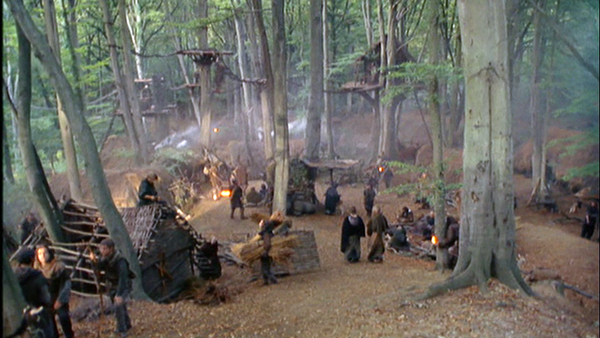

TO. THE. TREES. ALREADY. GUYS.

This is the part that drives me up the wall whenever I watch The Walking Dead. They spend so much time securing the prison. They spend so much time trying to repair those fences. They spend so much time building fucking walls and it’s stupid. I’m waiting for my man Daryl to have a light bulb moment and say “Hey, Rick…the dead can’t climb trees. Hell, they can’t climb ladders. Why in the hell are we living on the ground? Let’s build a bunch of tree houses all Robin Hood: Prince of Thieves style and be done with it.”


Any episode now, he’s gonna realize it and then go all “and E=mc², asshole!” and then, that’s it. I’m not sure what “it” will be but that will be it.

Seriously, I’m sure there’s some equation to demonstrate this but the larger the perimeter’s surface (re: the circumference of the fence) then the more zombies can surround it and the greater force they can enact upon it. Hell, they don’t even have to surround the thing, just get a sufficient mass at one point and the force will cause that point to buckle. One entry point does lead to a cascade of failure points as the herd forces its was through their opening, sending shockwaves and vibrations through the weakened fence. You’d have to bury half the damned fence, making it twice as “tall,” to diminish this and it would still eventually happen. (Physics peeps and math peeps can probably back me up here).

Trees, on the other hand, evolved to deal with this kind of crap because they had to put up with the wind and floods and thunderstorms and tornadoes. The circumference of a tree trunk is not sufficiently large for a herd to cluster around it in great enough numbers to build up the momentum and energy they would need to knock the tree over. Factor in the root structure and the fact that, for all that trees seem rigid to us, they’re really flexible, and you’re a chump if you’ve not moved back into them during the zombie apocalypse!

So, to kick off stage three, select your forest near a river, not too far from where you’ll be farming. Then start digging a deep trench from the river around the initial “city trees” you’ll be building in. Instant moat. Outside of that, dig another series of staggered trenches and line them with spikes. Cover that stuff with branches. Pit traps. Inside the moat, build a fucking double palisade and inside the gap — another trench with spikes. Then start building your homes up in the trees and connect them with suspension bridges. You can use waterwheels and modified aqueducts to get water from the river up to the tree-house level. You’ll probably want to look into building a “public” bathing house and setting up latrines outside of each house (use soil to absorb the “leavings” and guess what? You have fertilizer!) You can keep domesticated animals inside the palisade and, since you’re living in the forest now, hunting is easier.

Once that’s done, expanding your settlement to include more “city trees” is easy and does not require expanding the moat or palisade.

The great thing about this is that no one is going to want this set up. Restorers won’t go for it, warlords won’t want it (too damn much work). Scumbags would have a hell of a time finding it, let alone getting in. Your community will be forced to work together doing some fairly back breaking labor (don’t wax poetic to me about the nobility of subsistence farming. My great grand-daddy was a subsistence farmer). That will help you weed out trouble-makers and idiots. However, with this set up, you will have some leisure time and you may be able to spare some resources if you have happened upon some lone wolf types who are like Milton Mamet and would be wasted in the fields but could instead invent ways to generate electricity or improve aqueducts or the like.

Another bonus — everyone can sleep a full night. The rest will help out a lot in terms of health, energy, and cooperation. Since you don’t have to worry about the zombies breaking in since they can’t climb up and get you, you don’t have to post guard as much. You’ll still need some guards but they’ll be mostly watching for humans, not zombies.

In your own tree fort city of awesome, you can begin planning how to reach out to others, get news of what else is going on in the world, and start rebuilding a civilization. We’ll touch on that next time!

— G.K.
Zombie Apocalypse Readers Rejoice: Risen Ash Updated!

Zombie Apocalypse Readers Rejoice: Risen Ash Updated!

It’s Thursday, all, which means that it’s time for a little zombie apocalypse goodness with an update to Risen Ash. Serious discussions are taking place at the CDC involving paranoia, where to find information, and if people can be trusted. Shit is starting to get real, y’all, and eventually it’s all going to come to a head. But, for now, there’s work to be done so go read and find out…

As always, don’t forget that you can back me on Patreon or support my writing habit by getting a membership here today!

— G.K.

Sad Puppies: Why I Don’t Do Cons

Sad Puppies: Why I Don't Do Cons

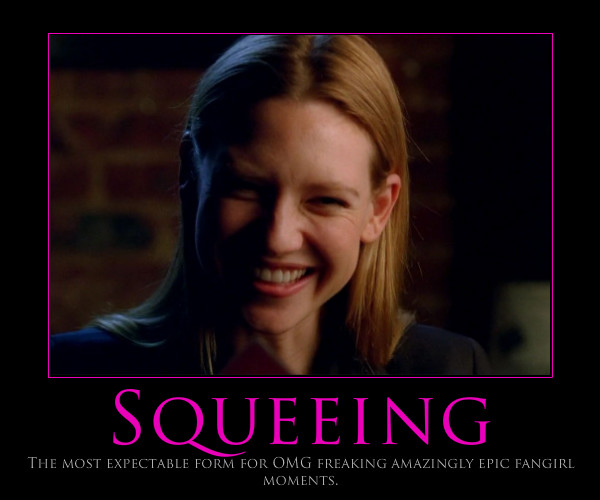
First, allow me to fangirl a little bit. Cedar just added me on G+ so I’m kind of doing this right now:

But then I started reading Sarah’s entry from today which led me to reading Vonda McIntyre’s entry which has led to a round of head-scratching, several cigarette breaks, a few consultations of Wikipedia’s entry on Arrow’s impossibility theorem, a lengthy session back on Khan Academy which involved a lot of swearing at parabolas (which seems to be the only aspect of algebra II I’m doomed to fail), and the realization that I’ve got a 2:30 appointment so I need to wrap this up already.

People: shit like this is why I don’t do cons. Okay, I went to BlizzCon (twice). I went to the WWI when it was in Paris. But for all of those — I worked for Blizzard and I was at the convention working. I’ve never been to E3, Gamescom, DreamHack, GenCon, IndyCon, any of the ComicCons, WorldCon, or WalkerStalker Con. I had wanted to go to LibertyCon this year but did not have the money. I may go next year if I can scrape together the funds and if work permits but that will probably be the only convention I’ll go to.

Why? Several reasons.

1) I hate traveling. Flying anywhere is a hassle. It’s expensive. Hotels are insanely overpriced and the food is crap (the Internet is generally shitty, too). Driving is a little better but the price of gas is insane.

2) So. Many. People. And you have to talk to them and you can’t hide from them.

3) Where there are a lot of people, there’s going to be a lot of noise. If I want a migraine, there are cheaper and more efficient methods to give myself one.

4) It’s become pretty clear that the people running these conventions don’t like people like me. If you think that the Sad Puppies had a point (that the Hugos were being given out based on the author’s politics and were going to sermon-fics that delivered a particular sermon instead of to stories/books that were well-written or told interesting stories with interesting characters regardless of the author’s politics), then you’re clearly not welcome at these conventions. At best, you’ll be just asked not to show up (and maybe made to feel like an unperson the way Johnathon Ross was). At worst — you get forced out for no reason with baseless and false (and malignant) allegations lodged against you (as happened against the Honey Badger Brigade). Being a minority, a woman, a lesbian, a non-American, or even all of the above does not protect you from this. You could be an African-born male-to-female transgendered post-operative black lesbian Rwandan socialist Muslim and if you happen to think “hey, Larry Correia had a point,” you might as well be a WASP man for all the good it will do you if you try to turn up at a con.

5) It’s actually getting borderline dangerous for those of us who don’t toe the SJW “Brianna Wu is our Goddessa and we shall sucketh Scalzi’s cocketh, Massa” line to live, let alone show up at cons. I really don’t want to get arrested, SWATTed, or have my car run off the road and die on the side of the highway.

So, I avoid them. I mean, why bother? The panels are just going to be about how people like me are evil, how stories I like are stupid, how I and my whole family should be killed, etc, etc, etc. It’s nothing I didn’t hear in the grievance-mongering circles at college. I’m not going to piss thousands of dollars away just to hear it while surrounded by cosplayers.

Still, it gets on my nerves. That one side or the other needs protection from the other. How about we all do the sensible thing and talk about the giant elephant in the room? The SJWs are crazy, they’ve got no problem with violence as a means to an end, they’ve got no problem with wishing death/torture/pain/rape/whatever on their political or philosophical opposition. It’s illogical to put yourself anywhere near them or in any place where they control ingress and egress or security. Not because they’ll kill you outright (they’re crazy, not stupid) but because they can make your life a living hell. Once you’re where they control the security systems, they can chose what the police see (and don’t see). They don’t need to win their cases in a court of law, people — for some things, the mere accusation is enough.

And you really want to go to where they’re going to be? Shit, I avoid being in the same ZIP code as them if I can. So long as I’m out in the middle of Bumfuck Nowhere, Landmassia — and can prove I’m there — they can’t accuse me of doing jack to them.

So again — do you really want to go to WorldCon and give them the chance to accuse you of theft, harassment, rape, murder, human trafficking, drug trafficking, or whatever else they come up with? Or do you want to do the sensible thing and stay at least three ZIP Codes and a time zone away from any SJW/CHORF whenever possible?

— G.K.

PS — If you must go, here’s a list of criminal defense attorneys in Spokane, WA. And, if you are going, add me on Facebook or Twitter and let me know. We can exchange contact info and I’ll volunteer to be your “one phone call” if you do get arrested on trumped-up BS charges.

Epic Fantasy: In The Shadow of Yggdrasil Updated!

Epic Fantasy: In The Shadow of Yggdrasil Updated!

If yesterday’s update didn’t quite hit the spot for your epic fantasy fix, maybe today’s will. In the Shadow of Yggdrasil has been updated! This week we see a bit more of the rescued Jotun prisoners and some hope on the horizon for them. Also, more little brother adorableness! The war is going to be tangential for a few more chapters but, don’t worry — it’s still a-raging. The action is going to pick back up soon. Enjoy the calm before the excrement hits the circular ventilator!

As always, don’t forget that you can back me on Patreon or support my writing habit by getting a membership here today!

— G.K.

The Vicious Hamster Wheel of Credentialing

The Vicious Hamster Wheel of Credentialing

…and how it impacts the publishing industry, the economy, and the rest of the world in general.

Okay, I swear, I am so not cyberstalking Cedar even though whenever I see that she’s posted something I drop whatever I’m doing and go read it because I’m beginning to wonder if she and I get messages from the same s00per s3kr3t radio station or something. We’re both evil unicorns (which is cool) and we’re both writers (though I think she’s more experienced than I am since I’ve only been in the game a few years) and we’re both nerds so there’s going to be some overlap. But when I read her post on the topic of credentialing, I had the strangest physical reaction (think full-body shiver and skin crawling) because I was thinking about this exact topic last night.

Eerie.

So, without further ado…

We live in interesting times. Really interesting times. In the past two hundred years, the world has flipped around in a lot of ways and some groups haven’t quite had a chance to catch up. The rate of change isn’t going to slow down anytime soon (if anything, the rate of acceleration is increasing) and it’s created rather a lot of chaos that makes it difficult for everyone. This started back with the Industrial Revolution but has really kicked into high gear with the Digital Revolution. However, for now, I want to focus in on one particular trend that’s been a particular nuisance in recent years and that’s the vicious hamster wheel of the credential chase.

Long ago, a young man would purchase an apprenticeship, serve a set number of years under a master craftsman, become a journeyman, then prove his skill as a master and be free to set up his own shop and take on apprentices himself. Credentials were reserved for things like the clergy (and thus controlled by the Church) or the universities (which meant they were for the aristocrats’ second or third sons). Very few people had them or needed them and thus, they were quite valuable. Then along came the Industrial Revolution and the modern education system with its assembly-line cookie-cutter approach and, for a short time, a high school diploma was sufficient for entry into the modern work force and could get a person a job at a factory or as a teacher, secretary, bank teller, or other office worker. College was for those who were going into more advanced fields.

But when everyone could get a high school diploma easily, the value of having one was lower and the credential was less valuable. Factor in that unions with their work rules, refusal to consider the impact of their demands on the business’s bottom line, and refusal to police their members and maintain high standards in work ethic to justify wage and benefit increases helped drive manufacturing jobs overseas; that globalization came in and cut out a lot of the protectionism the Industrial Era institutions relied on; and that things like the G.I. Bill started a very perverse incentive for colleges, lenders, and the government to feed off each other (and the taxpayer) and the credentialing hamster wheel started spinning. Suddenly jobs that once barely needed a high school diploma to be done now require a Bachelor’s degree. There are hundreds of professions that people used to freelance out of their homes that now require expensive (and extensive) licenses to perform (hairstylist, barber, masseuse, babysitting, tutoring, music lessons…) I’ve worked in the tech world for over a decade now and credentialing there is getting insane. Techies like to pride themselves on valuing knowledge over shiny badges but it is very hard to break into different fields without certain credentials these days and it’s very hard to obtain those credentials without already being in those fields because the certification tests are expensive.

I’m waiting for the day when the Bachelor’s degree I worked my butt off to get (I did a four-year in three) is as worthless as a high school diploma because everyone is required to have one. I’ve looked into getting a Masters degree but can’t afford one. And, to be honest, none of the jobs I’ve ever held have required me to use any of the crap I learned in college. I’m not saying that college was useless for me; I enjoyed it and learned a lot of valuable research information. I’ve just never really used any of it professionally. No, all of the skills I’ve used professionally are things I’ve either taught myself, learned on the job, or learned in high school and built upon in college.

Frankly, in the constant chase after credentials, the only ones coming out ahead are those who grant the credentials. Employers can’t be happy with it because the greater a credential they require for a job, the more they’re going to have to pay that person (and that’s another vicious cycle all its own). Regular folks aren’t happy with it because it gets tiring having to chase credential after credential just so we can check off boxes from an HR flunky who doesn’t know what she’s doing (really — I filled out an application a week ago that had listed as a requirement for the job “10+ years experience in PHP5 and HTML5” when PHP5 just celebrated a decade this year and HTML5 isn’t even a year old. Topping that, I’ve seen requirements for “At least 10+ years development in Ruby on Rails” when the framework is only nine years old!)

So, what is to be done about it? Well, first of all, fire all the HR departments. Then fire all of the politicians. Maybe consider setting them on fire while firing them? Or fire them into an orbital trajectory or something. Regardless — fire them a lot. Then shut down the entire education system, redesign it so that it actually creates a literate society instead of turning out factory workers, re-instate vo-tech-like schools for skilled trades and quit looking down on people who do that work because they’re cool people and smart as hell. They’re just smart in a different way like we’re smart in a different way, okay? To them, I’m as dumb as a box of rocks because I can’t unstop a toilet and I’m weird because I remember a particular cardio-arrhythmia that I read about and was able to deduce someone’s wife had based on a conversation they were having with the check-out clerk when they were at the grocery store the line ahead of me.

Not everyone needs to go to college. Not everyone is smart the way I’m smart and that’s okay. But we’ve really got to end the constant credential chase because, if we don’t, eventually Ph.D.s are going to be required to work the drive-thru at McDonalds. Unless, of course, we’ve replaced the entirety of the McDonalds staff with a robotic restaurant and the drive-thru is a voice-activated kiosk with a debit/credit card reader which is a distinct possibility.

— G.K.

Epic Fantasy: The Search for the Seven Scepters Updated!

Epic Fantasy: The Search for the Seven Scepters Updated!

Epic fantasy fans, rejoice; The Search for the Seven Scepters has been updated. This week’s chapter finally sees our brothers reunited and Blade is there, too! Also, a very fun pledge gets made that gives the story both its title and its purpose. And, we learn a bit more about why Blade is so resistant to taking the throne and about her family and her family dynamics. The next few chapters will reveal even more as well as picking up the action a good bit so stay tuned!

As always, don’t forget that you can back me on Patreon or support my writing habit by getting a membership here today!

— G.K.

Politics and Television

Politics and Television

Or “Why G.K. Didn’t Watch The Debate.”

Oh dear Lord, we’re going into another active phase of the perpetual election cycle, aren’t we? Last week we got to see the spectacle that was the GOP debate and, while I didn’t watch it live because I knew that, even with it being on Fox with supposedly “friendly” moderators, the talking-heads weren’t going to be able to resist their chance to ham it up for the cameras and that the entire thing was going to be more about ginning up the ratings for the sponsors than it was going to be about the candidates actually, you know, talking about the issues and debating different approaches following set logical rules and avoiding logical fallacies such as strawman, reductio ad absurdum, tu quoque, ad hominem, appeals to (false) authority, special pleading, No True Scotsman, post hoc, and more while presenting actual evidence and solid reasoning for their beliefs or policy.

Can you tell I’m a bit of a throwback and a cynic? Television has ruined a lot of things and debate, argumentation, and critical thinking are among those things. It’s a great medium for entertainment and it can be used for education, yes, and story-telling. Don’t get me wrong — I’m not one of those who thinks that television is completely evil and has no redeeming qualities. I enjoy it — I have an active Netflix account and I’ve got Criminal Minds playing in the background. But, when it comes to journalism, television is the worst medium that could be used. It doesn’t allow for truly in-depth coverage, cross-referencing, citation of sources, or deep thought. Newspapers are the best medium for daily coverage and bi-weekly or monthly magazines are great for bigger events or more thorough coverage of events or technical issues. Radio can be a passable medium so long as the moderators and the debate format are agreed to in advance and the topics are adhered to. Television, however, will never make a good medium for political debates or journalism.

Why? Because it’s commercial. And, that’s good for entertainment. Hell, it’s great. It means that businesses and consumers are free to reward shows and sponsors and channels that entertain them or tell stories they like or support or whatever without having to directly own the studios or airwaves or whatever. There’s no real need for government intervention, censorship, or anything like that other than “truth in advertising” laws (you can’t advertise that your wooden spoon is actually made out of marble) and possibly some kind of daytime/child-safety advertising laws (you can’t run alcohol ads or other adult ads during certain hours or on channels aimed at children — not that most marketers would sell or buy there anyway because it’d be stupid). However, it’s an undeniable fact that you don’t piss off your sponsors and you don’t piss off your core audience. Just look at GamerGate. Intel pulled their ads from Gawker when Gawker’s articles pissed off a sizable portion of the GamerGate audience and they threatened to boycott Intel. And that kind of pressure is fine for entertainment shows and even educational shows. But it is not fine for journalism. It leads to worries about offending the corporate sponsors or the consumers which leads to spin, blacking-out of stories, and a focus on feel-good stories or the promotion of news items in a way that is guaranteed to keep the money-spigot opened.

Another reason television is a terrible medium for journalism is because it’s a visual format which leads to people judging based on appearances instead of based on the actual argument. Have you ever noticed that all of the news anchors are good-looking? And that none of them are terribly intelligent or creative? If they were trapped in the middle of a desert, they’d be screwed. Hell, if they were knee-deep in a river, they’d die of thirst. They went to fancy universities, yes, but that means nothing. Unless they graduated from CalTech, Standford (with a degree in hard sciences), or MIT, it’s worthless. These people were hired for their ability to look good on camera and read from a teleprompter or from cuecards. They were not hired for their ability to think critically, reason, ask difficult questions, or for their finely-tuned bullshit detectors.

A final reason television is the worst medium for journalism is because of its shallowness. Television is a very shallow, very short-form medium. Since it’s so visual and auditory, it’s easy to get overstimulated which makes it difficult for long-term memory to be engaged (which is why visual tricks and cut-aways can be used to deceive so easily — see below). The set-time format makes it impossible for any topic to be covered in real depth and the inability for there to be hard, permanent reference points for citations or notes makes cross-referencing difficult, if not impossible. Add in the general passivity it requires of the audience and it’s just a terrible medium for something as serious as news journalism and political debates.

There are other reasons television is a terrible medium for serious topics — it’s untrustworthy because it can be deceptively edited without the viewer being aware of it at all and, unless there are other recordings made, there’s no way to prove it (and there are never other recordings because of technical and legal reasons — no sound studio is going to let an interview subject bring in his own film crew and sound crew because not only will that cause phase cancellation issues, energy, and temperature issues but it sets them up for liability and insurance nightmares. The studio and journalists also won’t go for it because then they won’t have the sole copyright, there will be a plethora of distribution issues, and it would force them to be too damned honest).

Television — great for entertainment but a terrible way to receive information and select our leaders. Just FYI.

— G.K.

Police Thriller Readers: The Masterminds Updated!

Police Thriller Readers: The Masterminds Updated!

Happy Monday all! I’ve just posted the latest chapter of my police thriller, The Masterminds, for your reading pleasure. We’re still going through a bit of a lull while team dynamics get established. This chapter isn’t just filler, though, so read it and enjoy!

Don’t forget that you can back me on Patreon or support my writing habit by getting a membership here now!

— G.K.